
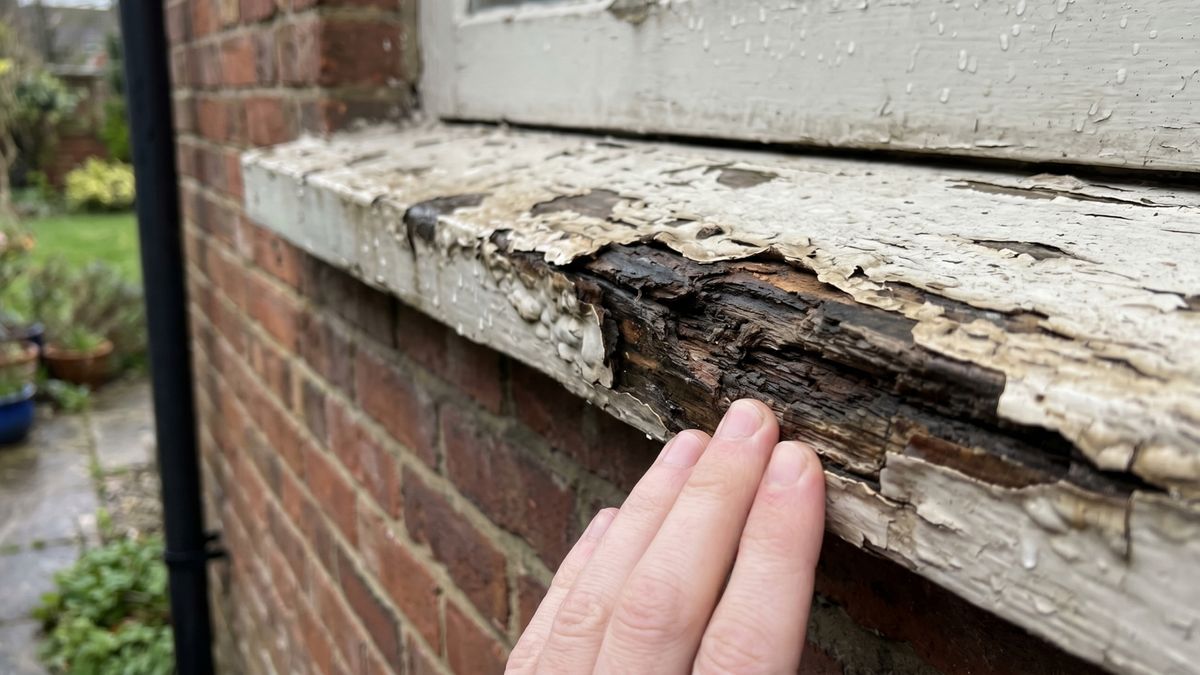
Wood rot spreads quietly and can cause major structural issues around your home. Moisture gets trapped in the wood fibers over time. This leads to decay that weakens the structural integrity of your framing. You might notice some peeling paint or soft spots near the frame. It is important to catch these issues early before the rot spreads to the interior walls. And, at Diversified Home Improvements, we want to show you exactly how to spot the early warning signs of window sill rot. You can easily check the severity of the damage using a basic tool from your garage.
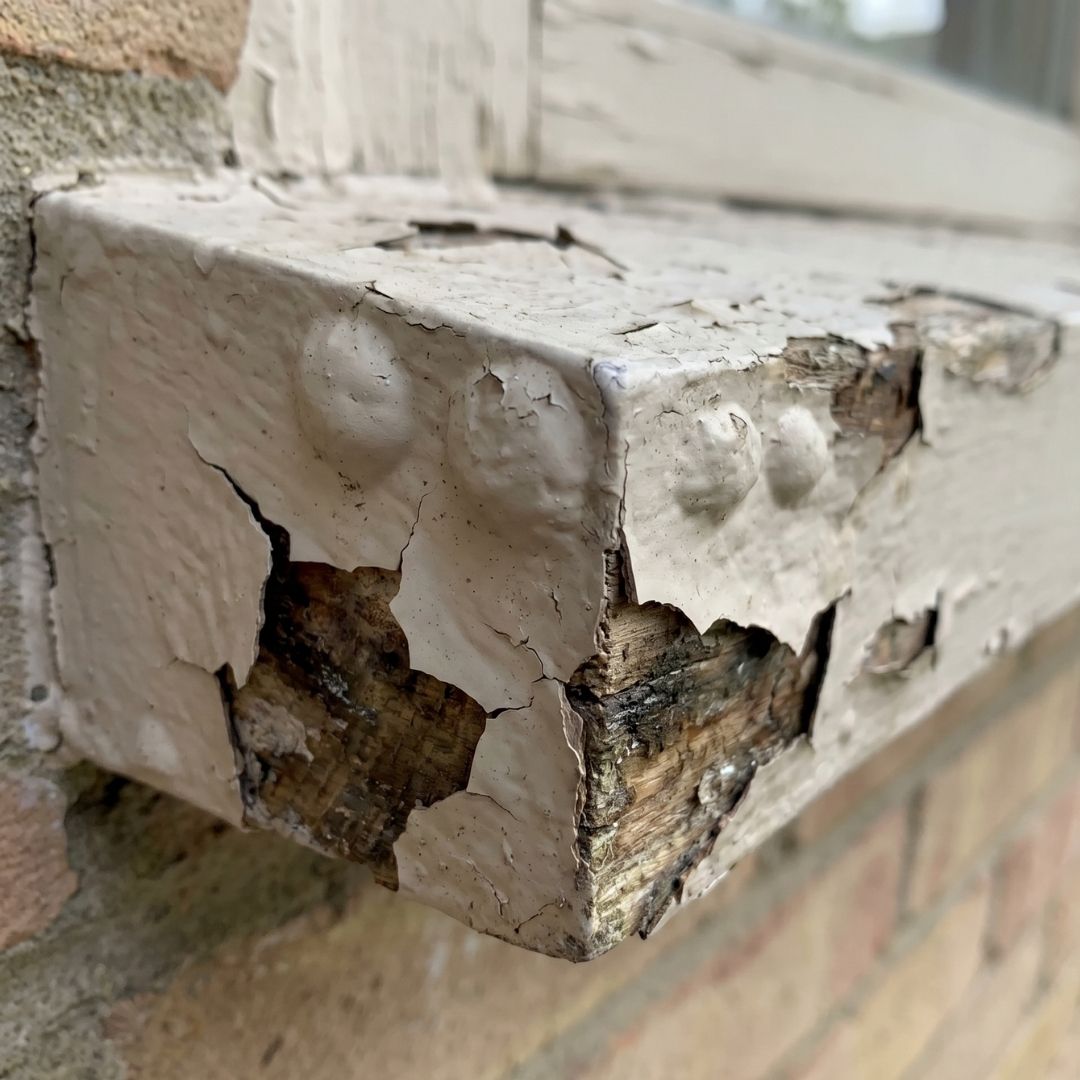
Peeling and Blistering Paint
The first visual clue of water damage usually appears right on the surface. Moisture pushes through the wood and breaks the bond between the material and the paint. You will see the paint bubbling up or flaking off in large chunks along the bottom edge of the frame. This indicates water is actively soaking into the material behind the surface. Leaving this exposed accelerates the rotting process. And you should look closely at the exterior trim after heavy rainstorms to catch this early.
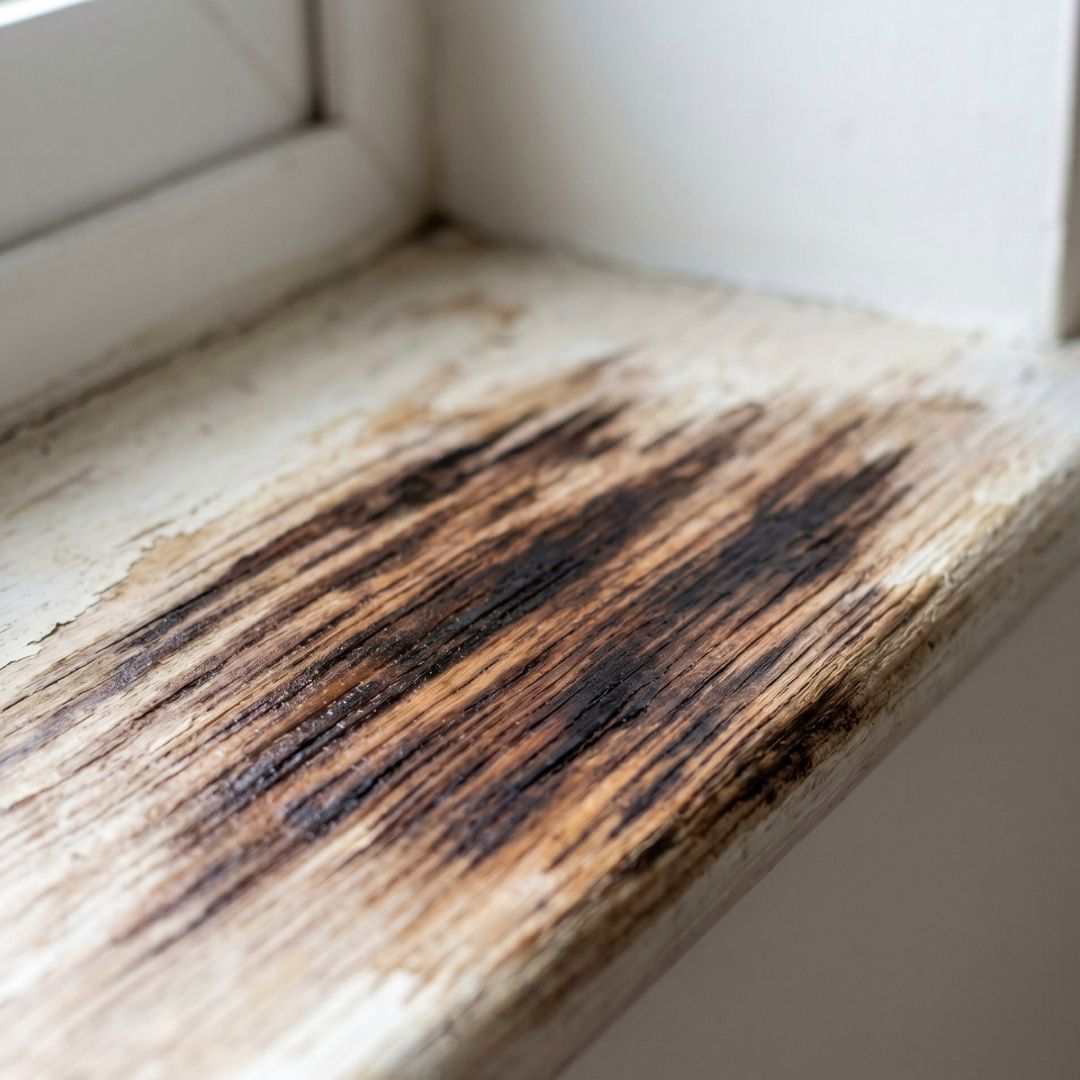
Discoloration and Dark Spots
Healthy wood maintains a consistent color across the entire surface. Water infiltration creates noticeable dark patches and stains along the lower corners of the frame. The constant moisture promotes fungal growth within the cellular structure of the timber. These dark streaks often look like dirt or grime at a quick glance. But wiping the area with a damp cloth will reveal that the stain is actually embedded deep into the material. Catching these spots early keeps your window repair costs manageable.
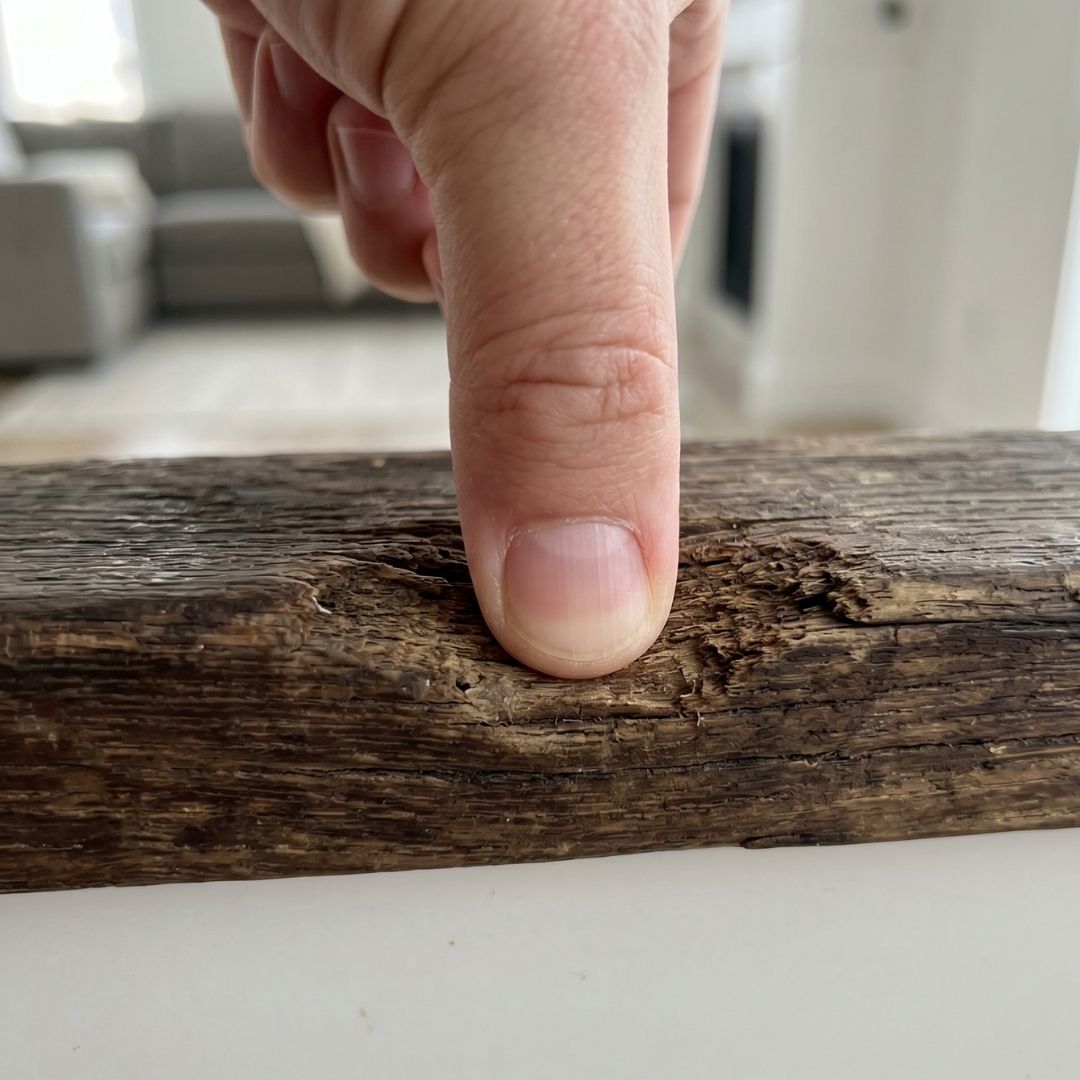
Soft or Spongy Texture
Decaying wood loses its density and structural strength completely. Pressing firmly on the sill with your thumb might reveal a surprisingly spongy texture. The material will compress slightly under physical pressure instead of feeling solid. And this obvious softness confirms that severe water damage has heavily compromised the interior wood fibers.
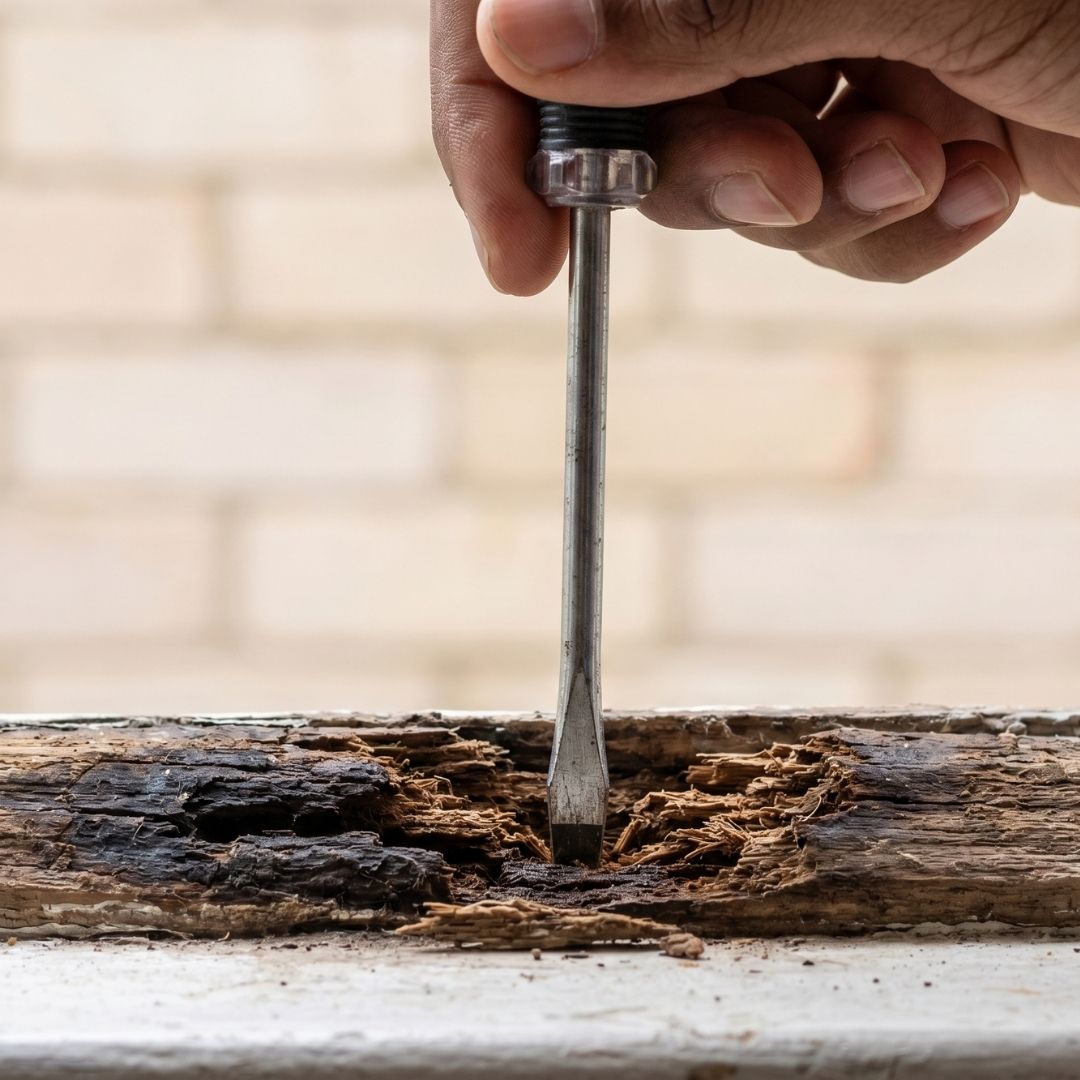
The Screwdriver Test Method
You can accurately measure the extent of the damage using a standard flathead screwdriver. Take the tool and gently press the flat tip directly into the suspicious dark spots or bubbling paint. Solid wood will resist the metal tip completely. Rotting wood allows the tool to sink right into the material with very little effort. So you should test several different spots along the bottom edge to see how far the decay has spread. This simple probing technique provides immediate answers.
Musty Odors Around the Frame
Visual clues are helpful but your nose can also detect hidden problems. Fungal decay produces a distinct musty smell as it feeds on the damp wood. This odor becomes highly noticeable when you open the window on a warm day. Trapped moisture inside the wall cavity creates the perfect environment for mold to thrive. Smelling dampness near the glass means the rot has likely moved past the exterior trim. Identifying this scent helps you stop the decay before it spreads further.
Spotting dark stains, peeling paint, and soft spots early helps you stop decay in its tracks. The simple screwdriver test gives you the exact information required to evaluate the severity of the damage. We resolve these structural issues by removing the compromised material entirely and building a solid foundation. Diversified Home Improvements fixes these problems to protect your property from the elements. Read our other guides on exterior maintenance for more helpful tips. Contact our team to discuss your current framing concerns today.